Visiting the Deaf Culture Centre

Just over a week ago I took the time to do some research into organisations, that either work with the deaf community or work in the realms of research and development in audiology. Reaching out to a couple of society groups via twitter didn’t prove fruitful at all, however reaching out to a Birmingham based charity BID that are also based in the UK’s first deaf culture centre has proven to be highly rewarding and enlightening to myself. 

Firstly just the conversation with Emma from BID on the telephone was really useful to start with, as someone not only had an interest in my story but by the nature of her job can speak with a level of authority and empathy about my own experiences. I had originally been looking to do a q&a about hearing, and what can be done to look after my hearing now and in the future. What the meeting turned out to be wasn’t a q&a session (being so busy with work hadn’t given me time to really give some questions much thought), but had turned out to be far more useful to me than a q&a session would have been. 

I agreed leaving work early with by boss, and he was quite interested in finding out if there was anything that could be done that would make things at work easier. I find that refreshing to hear, we spend a large chunk of our lives in the workplace, so it being a good environment to work in is extremely important. I personally don’t think there is much more that can be done at work as there are lots of small adaptations I have made without people noticing. Maybe there may be some changes that are made in the future, or even technology that comes along to help as it has done for others, including some I work with.

The walk across town in the autumn sunshine was a great way for me to process some of my apprehension about what I had agreed to. I have never really engaged with the deaf community at all, and wondered how I would be received when I arrived. I still hadn’t really managed to come up with some questions, but as I had been informed that I would be meeting someone who had, had a similar experience to me, I decided this would be an ideal opportunity for a bit of learning from someone else, and to let the conversation dictate any questions I had.

Upon arrival I noticed all the people there communicating with each other using a mix of speech and British Sign Language, and I instantly felt an air of positivity and happiness about the place. I met Emma at the reception desk right away, and within that first minute of being in the building those nervous thoughts from the walk disappeared. Emma introduced me to Terry and we headed to an office to talk.

The whole discussion was really engaging, and could have gone on for longer if we had had the time to. It started very much around finding out about each other and me sharing some experiences. The first key takeaway message that came out of it for me, is that in general when I tell people, they are actually helpful. That comes from being more accepting and being more comfortable with my own hearing loss, and not keeping it as a closely guarded secret as i have done ever since I left school.

We spoke about caring for my hearing, I don’t use earbuds for environmental reasons, and because of the risk they pose if you push them too far down the ear canal. I instead use an olive oil spray to break down wax build up and let my ears clean themselves there after. Some of this practice has come from having to have my ears syringed now twice after waking up on two mornings not being able to hear at all. All because of excess wax build up in the ear that works. When I go to gigs I try, and sometimes fail to take ear plugs with me just so my ears aren’t ringing for a couple of days afterwards. You hear stories of DJ’s and performers suffering with Tinnitus as a result of the loud venues they play in night after night, and I don’t want to add to what I already manage. Both Emma and Terry confirmed were great approaches to have

I also learnt about a range of terms, acronyms I had never heard of our used before. I also learnt about different types of hearing aid, and got to spend a short amount of time experimenting with one.  The one I tried is a bone-anchored hearing aid or BAHA which created the vibrations that the bones inside the ear should do, but like mine are fused together and can’t perform that function. I could definitely feel the vibrations the aid generated as we were talking, but it didn’t make any difference to what I was hearing.

The trying out of a hearing aid lead to a longer discussion around potential options for me going forward. Emma and Terry encouraged (it didn’t take much) to consider going back for an audiology test again. I haven’t had one since I was tested and found out about my hearing as a teenager, and like most things technology, knowledge, and testing techniques have likely moved on. It’s been almost 20 years since those test and MRI scan as a teenager. It was also a comfort and interesting to hear how good the Queen Elizabeth Hospital BIrmingham in audiology, and the advice I received to be insistent that my GP makes the referral to there over and above anywhere else. I also hadn’t realised that places like Specsaves or Boots also take hearing test referrals from GP’s, but given my where my own hearing is they wouldn’t be the right fit for me.

I am going to go forward and have a fresh audiology test done, firstly to reaffirm what I was told as a teenager and what I have been told since by. I am certainly intrigued to find out more about what is going on inside my ear, and whether there are any options for me. The dilemma for me has to be what I do about those options. I’ve been so used to having things quite hidden, and although hearing aid technology has moved on so much, and has become so much less obvious that someone is wearing one, would I want to wear one? I would say the same would be true if by some miracle there was a way of completely restoring my hearing. However it would be nice to know what my options are, and be able to continue to follow advances in tech and treatment in the future. 

Despite my nerves, and not quite getting the q&a session I had envisaged. The whole meeting has given me plenty of food for thought, and some actions for me going forward. Starting with contacting my GP to get the ball rolling. The session has also really helped me on my journey to better accept my hearing loss, to be more open about it and willing to tell people as people will generally be positive in their response, which from the comments, and message I have received since I started this have been fantastic! So thank you!

If you would like to find out more about BID, the work they do, who they support, and about the Deaf Culture Centre as a whole please visit https://www.bid.org.uk. It’s a brilliant facility, and just from the hour or so I spent there it’s made a difference to me.

Applications and Interviews

In my first entry I talked briefly about not telling my employer more widely about my hearing. The primary reason behind this is that I have never felt the need to say anything as I haven’t felt it would have any impact on what I do as part of my job. The second reason comes down to the experiences I have had previously when telling people about my hearing.

As mentioned in my first blog post, when I found out about my hearing deficiency and did the sensible thing and let the school know, one particular teacher’s reaction to it made up my mind for how I would, and who I would go about telling in future. I had been taught by this particular teacher in english lessons for most of the year before I found out about my hearing. The lessons were your average run of the mill lessons, nothing really stood out about his teaching style or lessons. Everyone has those lessons and teachers they most remember from back in school. If it wasn’t for this teachers actions my time being taught by him wouldn’t make the cut.

This teacher decided to approach things like he was the expert, and was going to change things for my benefit. His first point was how he had observed my head being turned more in one direction to hear what has been said. He also decided to tell me and my parents how much of an expert he was in teaching people with hearing loss. If there is one thing I have learnt about myself and seeing other people with a range of disabilities is not to treat people differently, or single them out. It doesn’t do either party any good whatsoever.All the other staff members at the school that knew took it as part of everyday life, as if well it hasn’t affected you so far so why should it change anything going forward.

When it came to applying for sixth form, jobs, and university I made the conscious decision to tick the no button to any questions about disability or any special arrangements I required should i be selected for an interview. I didn’t want people I didn’t know to find out or automatically be treated any differently to any other candidate as a result.

In applying for jobs including in the very recent past I have noticed some employers giving a higher priority or even a guaranteed interview for people with a disability if they meet a certain standard in their applications. As I don’t see myself as having a disability, (even though by definition I do) this approach by employers has never sat comfortably with me. In fact it’s encouraged me further not to tick those boxes and let an employer judge my application purely on its merits.

Even in my most recent application in having to apply for my own job, despite my boss knowing about my hearing I still chose not to tick that box on disability. I did though for the first time take longer to think about it this time round, which has been as a result of being more open about my hearing.

Disability and employment was a challenge I was set to work with at an event recently hosted by Birmingham City University. It brought together people from across the public sector as part of a data jam and challenge to find solutions to a set of problems. It was great to work with people from the university, DWP and third sector to look at how we get more people with disabilities into work.

It was really interesting to hear in particular from the DWP how both employers still struggle to get their heads around employing people with disability (although its improving all the time) and how people with a disability either don’t have the confidence to apply for roles, or like myself choose not to disclose on application forms when applying. It was also pleasing to hear examples of where a disability has later been discovered, or developed employers taking the right steps to accommodate the disability or in some cases create roles that utilised some of the skills that a personals disability enhances.

I came away with a couple of bits of new information that I didn’t know previously and one certainly needs greater attention. Firstly i learnt that there is a programme in place that employers can take advantage of and demonstrate they are well set up to employee people with disabilities. The programme is called “Disability Confident” and comes in 3 levels. I had never heard of it before, and really should have given some of my day job involves working to ensure young people with education health care plans or have other special educational needs are transitioning into employment following completing their studies. I also learnt that the most common disability amongst adults in the UK are mobility based, where as amongst children behavioural is the largest group of disabilities.

From deciding not to disclose at all about my hearing after the experience of one teacher at school until I left the data jam event, my outlook on hearing has changed. Although I still don’t think I’ll tick those boxes on application forms relating to disability, as I feel the quality of application alone should be enough to decide whether the application is taken forward or not. However in work I feel I can now be a little more open about my hearing, as there are definitely situations and occasions where it would be of a benefit to me and the people around me.

An Evening in Leeds

My original plan for this entry was to go into more detail on how I approach everyday life living with a hearing deficiency. However my recent trip to Leeds to see a friend brought up one of the side effects of my hearing that I often forget about, when entering a bar that served beer and pizza. (Hunger and lots of stairs had worked up an appetite – eating is not cheating)

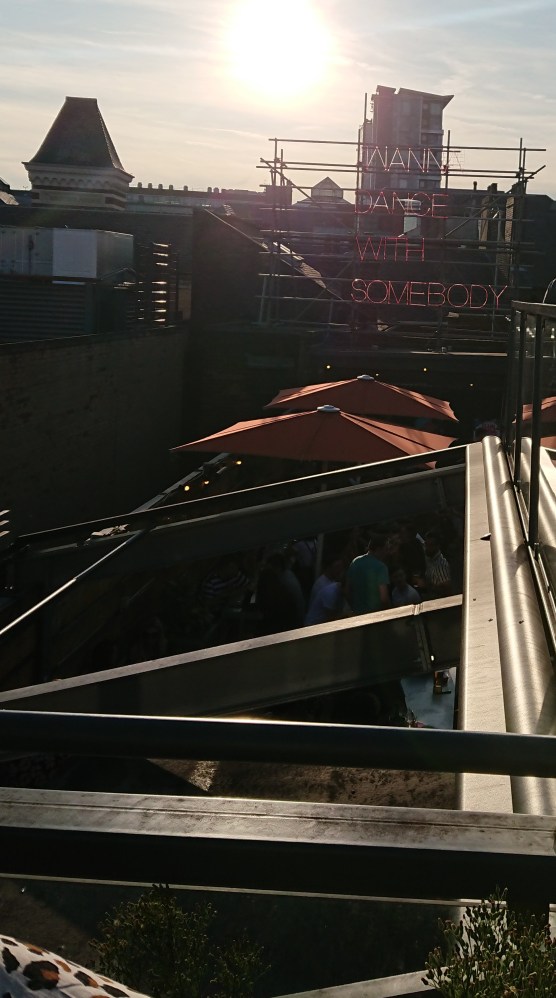
Upon entry to the pizza and beer place I’d had around 5 beers spread out over several hours between playing foot golf, climbing several flights of stairs to a bar with a slight roof terrace, climbing more stairs to another bar with a proper roof terrace, and entering a bar which was a clear throwback to the 90’s (cash payment only – so inconvenient in 2019).

The doorman to the pizza and beer place who is just doing his job asked me where I had been that evening as I looked like I’d had a few. I am terrible at remembering names of places and couldn’t remember where we’d been (whilst writing this I have remembered I actually posted and Instagram story from one of the bars including tagging in the location!) After a moment or two I was able to describe where I had been. The man on the door didn’t look convinced. One of my friends poked his head out the door to ask what was going on. Then off the cuff told the door man that I was deaf in one ear and it had an adverse effect on my balance, and that even sober I can’t walk in a straight line. Within seconds I was in, in the queue ordering pizza and a beer.

By this point I had got very conscious of my movements and how I would be perceived so I decided that I wasn’t going to draw any more attention to myself and sit in a corner quietly, enjoy my beer pizza and good company. Only once before had a friend stepped in and used my hearing to get me into Snobs (an absolute institution and part of the fabric of Birmingham, which has never been the same since it moved, and I passed 30).

My plan was going so well until nature called and I needed the loo. Getting up, I told myself “Matt concentrate and don’t look wasted”. This is just like saying after a heavy night out you’ll come into the house/flat quietly, it doesn’t work.

Successfully navigated stairs (again) and people to go the loo. On my way back to my seat I get tapped on the shoulder by another bouncer and asked to leave because I was swaying a lot ( I’d had another half a pint on top of what I’d already had).  I thought that I wasn’t having this and took a leaf out of my friend’s book and told this bouncer the same thing as the doorman. He wanted to check with the doormen, I don’t blame him; it sounds a pretty elaborate well practiced story. Add that to me being mildly annoyed and distressed to be asked to leave and explain myself again. The guys on the door confirmed the story and I was free to go on my way again.

The friend that helped me out for round one saw that I was annoyed and upset (I’d messaged him saying I hated using my disability as any form of excuse – he told me to behave). He rationalised things for me by telling me the bouncers/doormen were just doing their job, and how were they supposed to know? They can’t see any disability on me; use this experience as your next blog entry.

So here I am sat in his kitchen the morning after, Lucozade in hand (hangover prevention) headphones on doing just that. I also couldn’t sleep and have been awake since half 6 as one of my friends sounds like a freight train when he snores, and no one else is awake.

What happened at the pizza and beer place (I don’t remember the name and probably never will unless I go back there) didn’t ruin the evening at all but it has brought to my mind a couple of things to reflect upon.

Hearing and balance are much more intertwined than I thought.

My parents tell me that when I was about 18months to 2years old they got very concerned that I fell over far too much. Upon advice from the GP they were asked to count how many times a day over a period of a couple of weeks. I’m told that this got up to 100+ times on one particular day. The GP advised my parents that my sense of balance and coordination was underdeveloped and that I needed to do certain exercises to help correct this. My fond memories of a blue and yellow scooter come as a result of those exercises I was given to help improve my balance and coordination. It’s not perfect as I can’t walk in a straight line sober and randomly trip over my own feet for no reason whatsoever. My parents also came up with a brilliant reason for my trips and falls, they invented “fresh air sticks”. Note I don’t fall over fresh air sticks anymore, and despite still not being 100% balanced it did take until I was 28 and playing football after a couple of beers to break a bone.

Alcohol clearly doesn’t help this, and on occasion this unbalanced look is more pronounced. 

In my last post I described the basics of what doesn’t work in my one ear. The impact of what is going on in my inner ear would seem to have a direct effect on my balance which is also controlled deep within the inner ear.

The experience in Leeds isn’t going to change how much I drink in future, I get pretty rough hangovers as it is which is enough of a deterrent from overdoing it on a night out anyway. I also like to remember my nights out more often than not, and get bored of drinking by a certain point on a night out. 

My second reflection is that I am still learning to accept people’s perceptions of me and having a hidden disability. 

My disability is hidden with no obvious sign of what or where it is. I can’t wear a hearing aid, and it would make no difference to me whatsoever. As much as I was upset and annoyed at having to explain my disability and use it as a reason to explain my state, I don’t hold anything against the doormen I came across in Leeds. 

I’m so used to my friends and family that know treating me no differently to anyone else. The whole name of this blog comes from having to tell friends when we’re out that they’re talking into the wrong ear and then laughing about it. Their treating me as no different to anyone else is a comfort and testament to them. However I expect 99.9% of people to treat me the same way, so explaining what I have to people is extremely hard, because I don’t want to be treated any differently.

When I’ve had to tell strangers to help resolve a situation like entering a bar, complaining about the TV is too loud, or tell someone to speak up because I can’t hear them. I am always surprised by the responses I get, and I get one of 3 general responses.

  1. The surprise followed by a very British sorry, awkward laugh, and sharply disappearing and avoiding me at all costs.
  2. The surprise followed by over compensation, over concern and making the biggest deal possible of it. 
  3. The acceptance, a few questions about it and how best to subtly adjust so things appear as normal as possible.

I get the second response the most; I would much prefer the third response. So I never know how to tell people to increase those chances of getting the third response, and having to explain off the cuff is incredibly difficult for me to do, having friends that can do that for me is great.

Writing this down and explaining this way I hope will begin to change people’s perceptions so I get more of the response I prefer, and get more comfortable with being open about my hearing.

The Introduction

Hi I’m Matt, 
On appearance I don’t look or sound like I am anything other than a normal 30 something brummie going about daily life like anyone else. 
However appearances can be deceiving, for as long as I can remember and for as long as I live I experience something that is generally most of us take for granted without a second thought. I have a hearing deficiency. Whilst not the most dramatic of disabilities or the most obvious. I still count myself extremely fortunate to be able to lead a normal life 95% of the time. 
The simple way to describe how my hearing is less than the vast majority of peoples is to say that 1 ear doesn’t work at all. The other is brilliant! Dr’s have said there is no cure, it won’t get better on its own at all, and there isn’t any equipment out there to aid hearing that would make any difference whatsoever. 
I didn’t actually have it acknowledged and diagnosed until I was 14. That was at the instance of my mother who was sick to death of me not hearing her calls, or replying with “pardon” or “what” almost all the time.  She was convinced (and rightly so) that there was something wrong and that I wasn’t just being a mildly obnoxious teenager choosing not to listen. 
I guess upon reflection I’ve always known there was a difference between both ears. But then again speakers for TV’s stereos, headphones all distribute sound differently depending whether it’s the left or right so how would I as a child know any different when my life was no different from the other kids at school. 
I went through 3 separate hearing tests each one more intense than the other, and an hour in an MRI scanner to determine exactly what was going on in my ears. The diagnosis was that my ear drum was fine. The three little bones in the middle ear (Malleus (hammer), the Incus (anvil) and the Stapes (stirrup)) were fused together and didn’t vibrate as they normally would. The result of which meant the vibrations in the fluid in the cochlea doesn’t occur which in turn means the little hairs that act as nerve endings aren’t receiving vibrations to send signals to the brain. To add to this those tiny hairs and nerve endings are dead so no electrical signals are transmitted to the brain at all. 
Initially after diagnosis I was happy to tell people what was wrong. That changed very quickly following the reactions of (some) teachers who made far too much fuss about it and were probably inadvertently a bit insensitive, and did more to draw attention to me than not. I also was on the receiving end of some unhelpful comments from other lads at school who just didn’t get it and were more than happy to poke fun at difference. Some of those lads I’ve known and have been friends with since still take the piss but there’s no harm meant by it now as I don’t mind it from them anymore. 
I have since been very selective about who I told, and when I told them. There are women I have dated who I have never told; there are probably some friends who don’t know. At work my line manager is the only person that knows, and that is only because of me waking up one morning and no being able to hear at all because my good ear was blocked up.
I had taken this decision following the initial experiences of telling people, I didn’t want the attention, special treatment, comments from people who didn’t understand, or having the repeatedly explain how it works over and over again to confused faces. 
You’ll be asking, well why are you telling people now after more than 15 years or relative silence. 
My answer to that would be, why should, I continue to keep it quiet when actually being open and explaining about my hearing would be a much better way of tackling some of the negative experiences I have had with telling people. I’ve also been inspired by people out there also talking about their own differences, still getting on with their lives as well as I do. I also love a challenge and in a world where the images and sounds on our phones, tablets, laptops, TV’s etc. explaining and demonstrating how the world sounds to me excites me. 
So over the coming weeks I’ll try and give an idea of what I hear compared to most people. How certain social situations work out good, bad or funny. Show how I manage to effectively hide my disability in a subtle way. Show the different reactions I get to telling people I meet and finally give people an idea of what day to day life is like hearing the world differently to everyone else.